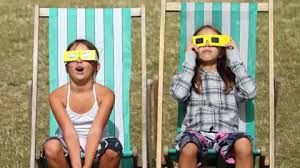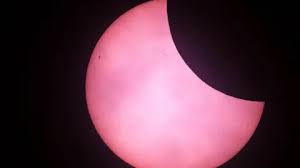
Where To Watch Europe's 2026 Solar Eclipse Without Joining The Crowds
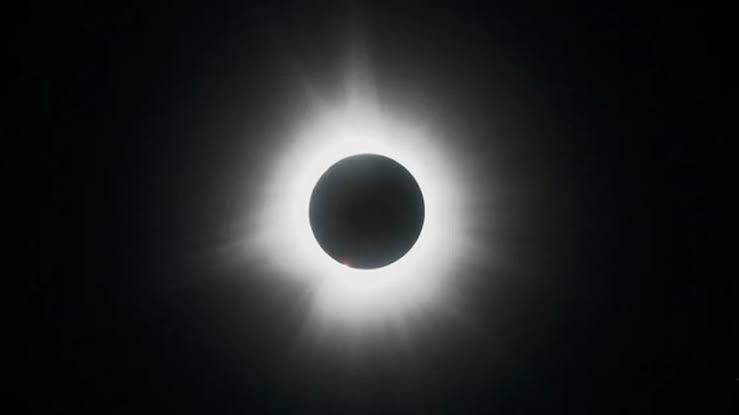
Europe's first solar eclipse in 27 years is expected on Wednesday, August 12, and travelers are eager to book the best viewing spots.
Science news from Google News (RapidAPI).
5736 articles
Europe's first solar eclipse in 27 years is expected on Wednesday, August 12, and travelers are eager to book the best viewing spots.
For years, physicists were stuck in trying to explain an important mathematical problem in physics. The right approach ended up being too simple.
The planet was first reported in 2024, but new radial-velocity observations have revised its properties.
An international team of astronomers has used the NASA/ESA/CSA James Webb Space Telescope to watch the Jupiter-sized exoplanet WD 1856 b transit its host...
Of all the strange worlds in our Milky Way galaxy, some of the most mysterious are those hanging around white dwarf stars.
The potato is the third most important staple crop on Earth. Together with wheat, rice, and maize, it provides approximately 80 per cent of all the calories...

When astronomers discovered a giant planet orbiting a dead star in 2020, they wondered how it survived its star's violent demise.
The earliest evidence of spiders' fangs has been identified in a 518-million-year-old fossil by scientists at the University of Leicester and Yunnan...
The sun still has a long life ahead of it, say five billion years or so. But our star is still on borrowed time. When its inevitable end arrives, the sun's...
NASA's James Webb Space Telescope is giving us new insight into the far-future of solar systems like our own, as the agency continues to reveal the secrets...
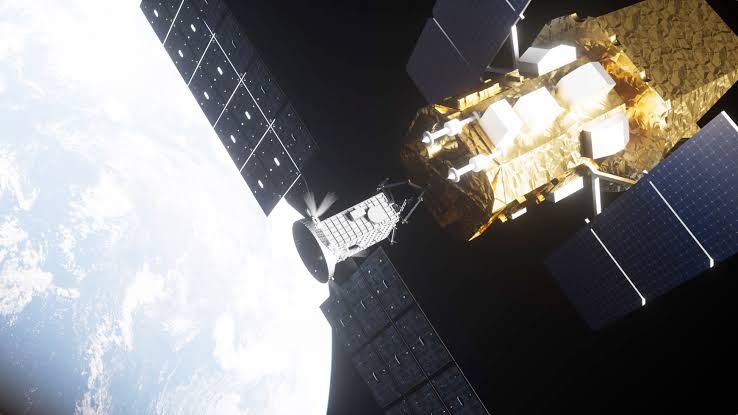
A robotic tugboat has launched to pull a decades-old space telescope to safety. A private spacecraft called LINK is on its way to rescue NASA's Swift space...
A new study suggests creating a satellite constellation, dubbed StormWall, that could reduce the impacts of the worst solar storms by more than 50%.
Scientists use gravitational waves from colliding black holes to study event horizons, testing Einstein's general relativity at the extreme boundaries of...
Previously lost fossils sometimes reemerge, but how do palaeontologists end up losing specimens in the first place?
Scientists say they have built a cell from scratch for the first time that can feed, grow and replicate like a natural cell. This breakthrough in synthetic...
Scientists built a synthetic cell that combines more lifelike properties than ever before — proof of concept that it's possible to bring nonliving materials...
Tiny, quivering spheres designed to feed and multiply raise prospect of artificial organisms to make drugs, food and fuel.
A powerful X1.1 solar flare triggered radio blackouts across parts of North America on June 3. Will the accompanying CME bring northern lights?
Life on Earth could continue for another 1.8 billion years, according to new research. This figure, which is based on complex climate models, is far longer...
Using complex climate models, researchers have pinned down the point at which life will no longer be able to survive on Earth.