Apes and humans have been sharing a laugh for 15 million years
Great apes may have been laughing with a similar rhythm to modern humans for at least 15 million years, a University of Warwick study reveals.
Science news from Google News (RapidAPI).
5736 articles
Great apes may have been laughing with a similar rhythm to modern humans for at least 15 million years, a University of Warwick study reveals.
Even Universal Pictures thought it was silly when Fast & Furious took a car into space in 2021. Pump the brakes on the jokes, though, as the experts reveal...
Water is the most studied molecule on Earth, yet a surprisingly basic question has gone unanswered for decades: When water is squeezed into gaps just a few...
There is no natural explanation," says paleoanthropologist John Hawks.
Water microdroplets convert aniline into pyridine at the air–water interface under ambient conditions, without added catalysts, oxidants, or extra reagents.
Our prehistoric ancestors experienced a rapid growth spurt between 2 and 2.5 million years ago, coinciding with increased meat consumption and more...
The featherweight pair — orbiting a star 1110 light-years away — are the biggest exoplanets found to have less density than cotton candy.

NASA has published its latest plans for a moon base, but do they have too much gravity? Will Wiles looks for more delight in the details.
Gravity, the force that attracts objects toward each other, is currently framed by Albert Einstein's theory of general relativity.
NASA plans to save the Swift spacecraft with a rescue mission that will boost the spacecraft higher into orbit. Currently, its orbit is decaying quickly.
Four NASA exploration projects that the agency stopped earlier this year as part of Artemis changes suffered overruns that saw their costs more than double.
Rumours have circulated that it could be used to transport military hardware.
Sound waves, light waves and other types of waves, generally spread freely through space and over time. In 1958, physicist Philip W. Anderson first...
The Euclid space telescope has captured the largest and most detailed photo ever taken of our galaxy's crowded heart, a dazzling image packed with 60...
The oldest known asteroid impact site on Earth was created 3.02 billion years ago in what's now Western Australia, scientists find.
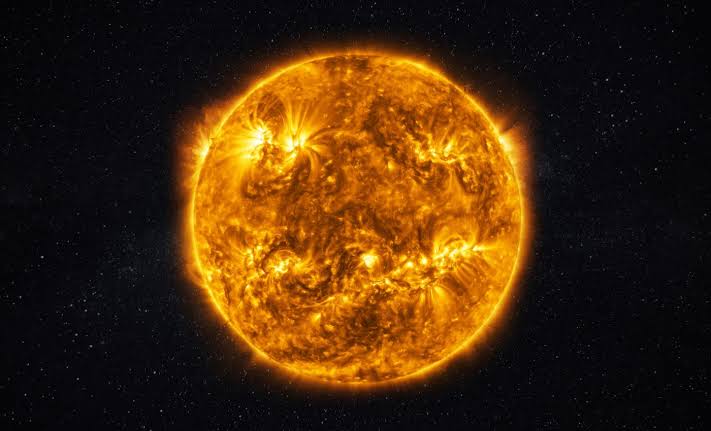
The yellow Sun of ordinary Earth life is partly an atmospheric effect: Rayleigh scattering sends blue light into the sky and leaves the direct solar beam...
Data from NASA's Perseverance rover confirms the presence of macromolecular carbon on Mars – another potential piece of the puzzle in the search for life.
The Strawberry Moon will rise above South Carolina on Monday, June 29. Here's how it got its name.
A new report links the problems with Boeing's Starliner to a combination of overconfidence, unrealistic schedules and lack of insight into the vehicle.
A new analysis detected hidden charcoal in black cave paintings at Font-de-Gaume, allowing scientists to accurately date the artworks for the first time.