Major new telescope on Chilean summit opens window on universe
Thirty-four years after Cornell University scientists first conceived it, the Fred Young Submillimeter Telescope (FYST) now rises above the Atacama Desert,...
Science news from Google News (RapidAPI).
5736 articles
Thirty-four years after Cornell University scientists first conceived it, the Fred Young Submillimeter Telescope (FYST) now rises above the Atacama Desert,...
As the Orion spacecraft hurtles home, friction caused by reentry into Earth's atmosphere will drastically decrease its speed from a potential 25000 miles...

After successfully completing their mission to the Moon, the Artemis II crew is about to return to Earth. The four astronauts set a new record for how far...
When the Artemis 2 Orion crew capsule returns to Earth after flying around the moon, it will hit the discernible atmosphere some 75 miles above the Pacific...
Comet C/2025 R3 (Pan-STARRS) is becoming brighter as it approaches the inner solar system, and it will become easier to spot in the next few days.
Comet MAPS (C/2026 A1) didn't survive its close encounter with the Sun, ruining its chances of brightening up the night skies.
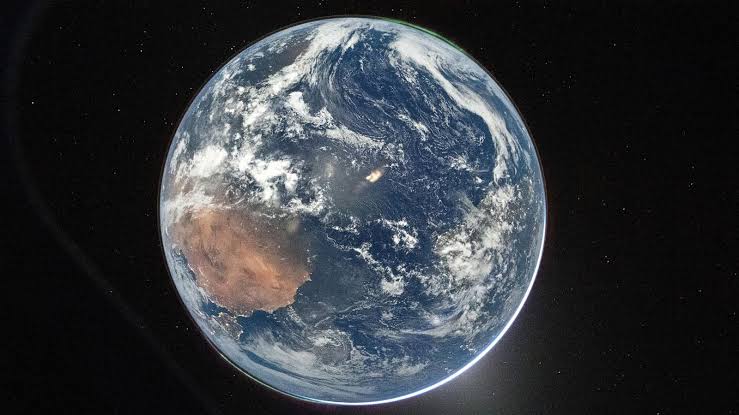
Seen during Artemis II's lunar flyby on April 6, 2026, the Moon and Earth align in the same frame, each partially illuminated by the Sun.
A rare long-period comet returns after 170000 years — here's how to find comet C/2025 R3 (Pan-STARRS) before sunrise this April, with key dates,...
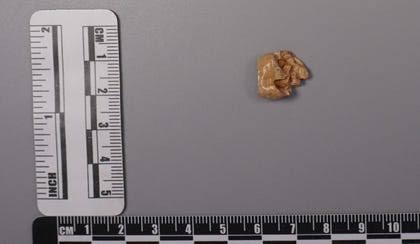
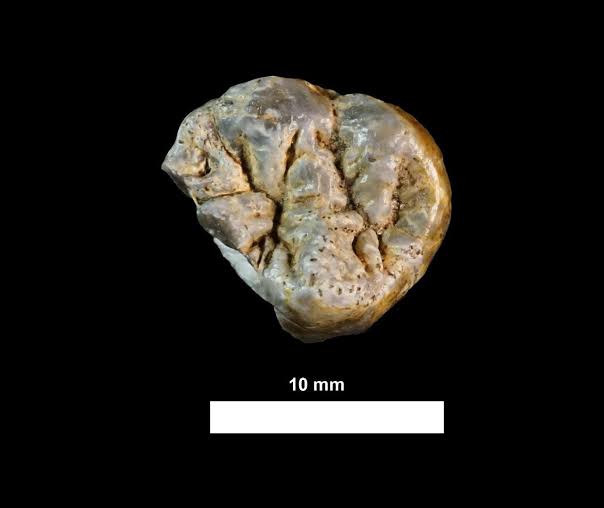
Pohlsepia mazonensis, a visually underwhelming fossil from Illinois, fundamentally broke our understanding of cephalopod evolution.
Jacqueline McCleary, an assistant professor of physics, said the odds of the Orion capsule's heat shield failure are largely uncertain.
NASA's Artemis II heat shield is about to face its ultimate test as the Orion crew prepares for reentry. Physics and data science lecturer Ed Macaulay tells...
A centuries-old meteor shower is about to peak, offering skywatchers a rare chance to witness bright streaks of cosmic debris lighting up April nights.
A quiet Artemis passage behind the Moon has delivered a view that few humans have ever witnessed, and even fewer have captured.
NASA is already preparing Artemis 3 while Artemis 2 returns home, signaling an accelerated path back to the Moon.
Shock waves from tiny black holes in the early universe could explain how antimatter became so rare while matter is common.
Tiny worms aboard a SpaceX rocket may hold the key to solving one of the biggest challenges facing future space missions: how to keep astronauts healthy...
Scientists discovered that making a very small change to female mice's DNA caused them to develop male reproductive organs. When you purchase through links...
Ripples in the very fabric of space and time called "gravitational waves" may have provided the first tantalizing evidence of tiny black holes born during...
The end of the historic Artemis II mission kicks off a race to establish a permanent human presence on the moon.
Like any great adventure, and especially one we can follow minute by minute, act by act, the flight of Artemis II, which is ending on Friday,...