Scientists finally solve why humans became overwhelmingly right-handed
Researchers argue that humans became strongly right-handed through a gradual evolutionary process tied to bipedalism and brain expansion rather than a...
Science news from Google News (RapidAPI).
5796 articles
Researchers argue that humans became strongly right-handed through a gradual evolutionary process tied to bipedalism and brain expansion rather than a...
Mysteries abound on our planetary neighbor Venus, not least of all because it's permanently shrouded in a thick and nigh-impenetrable layer of clouds.
New images taken by several NASA satellites capture vividly colored plums brewing off the Mid-Atlantic coast.
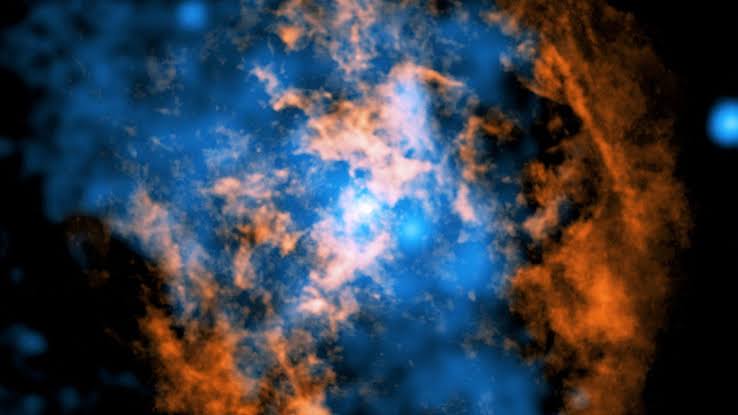
Astronomers have captured detailed evidence of how turbulence in the Milky Way bends light from a quasar 10 billion light-years away.

Satellites have spotted a striking bloom in the Atlantic off the US east coast. The swirling patterns of color hint at something massive and unusual...
A NASA spacecraft chasing a rare metal asteroid swings past Mars this week for a gravity boost.
Human brains may have shrunk about 3000 years ago as collective intelligence grew, researchers suggest.
Scientists may have uncovered the ocean you'll never see on a map, locked far below Earth's crust.
Astronomers have revealed the sharpest image ever captured of a filament in the cosmic web — the enormous hidden structure connecting galaxies across the...
The Milky Way, dazzling planets and faint constellations shine under dark skies surrounding the May 16 new moon. Here's where to look.
A new study out of Texas A&M found a long-dormant ability for mamals, including humans, to potentialy regrow limbs.
For billions of years, Earth and Mars have been orbiting the Sun, but new research suggests they shared more than just the same Solar system.
Scientists have stumbled upon a dinosaur of incredible size in Thailand, but the full excavation is far from complete.
NASA's Mars relay infrastructure is dying, and the agency just put a 30-day clock on finding a replacement. What is this? Report Ad.
NASA's Psyche flyby of Mars highlights how gravity assists help spacecraft gain speed, conserve fuel and travel across the solar system.
In 2010, I attended the official inauguration conference of a new campus of New-York University in Abu Dhabi, along with my Princeton colleague, Ed Turner.
Oxford study links human right-handedness to bipedalism and larger brains across primate evolution.
Mars may look dry and lifeless today, but new discoveries from NASA's Perseverance rover suggest the planet's past could be far more dynamic than anyone...
A stunning fossil discovery in Ethiopia shows that early Homo and a previously unknown Australopithecus species lived together around 2.6 to 2.8 million...
The European Space Agency's Mars Express orbiter has returned a fresh portrait of one of the Red Planet's most dramatic flood-carved regions,...